Case study · Product Design · 2025–2026
Prior Authorization Platform
A proof of concept for intelligent orchestration with Large Language Models (LLMs) to automate medical document review and streamline complex authorization flows, aligned with Brazilian regulator (ANS) rules.
- Client
- Neurotech | Trillia [B3] · Seguros Unimed
- Role
- Product Designer
- Timeline
- 2025 – 2026

+40%
projected analytical efficiency
-30%
fewer improper automatic approvals
PoC
architecture validated against real medical audit scenarios
- 01
Discovery and market intelligence
A structured benchmark of competing platforms, comparing capabilities such as customer data combination, natural language recognition and automated document reading, to position the solution with a clear differentiator.
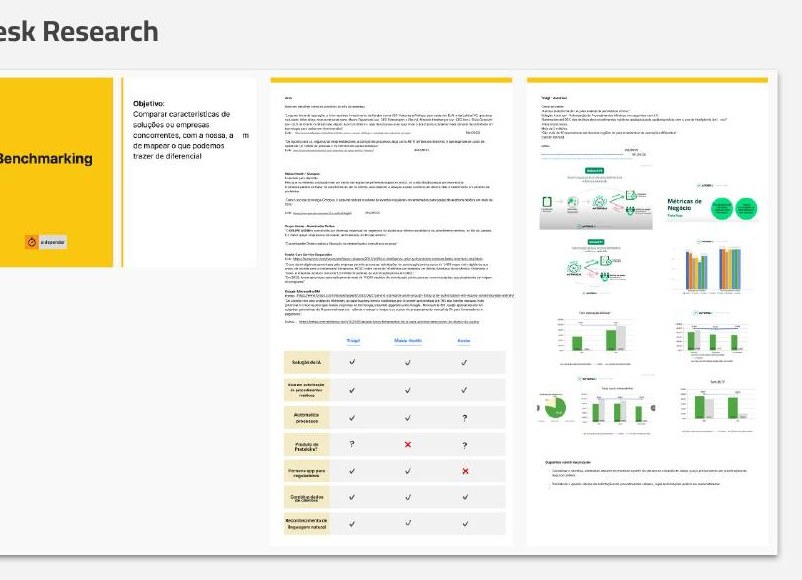
Desk research and competitive benchmarking - 02
UX strategy and product definition guidelines
We set the guidelines that would drive the product: transparency of model decisions, traceability of authorizations and adherence to regulatory rules — non-negotiable requirements in medical auditing.
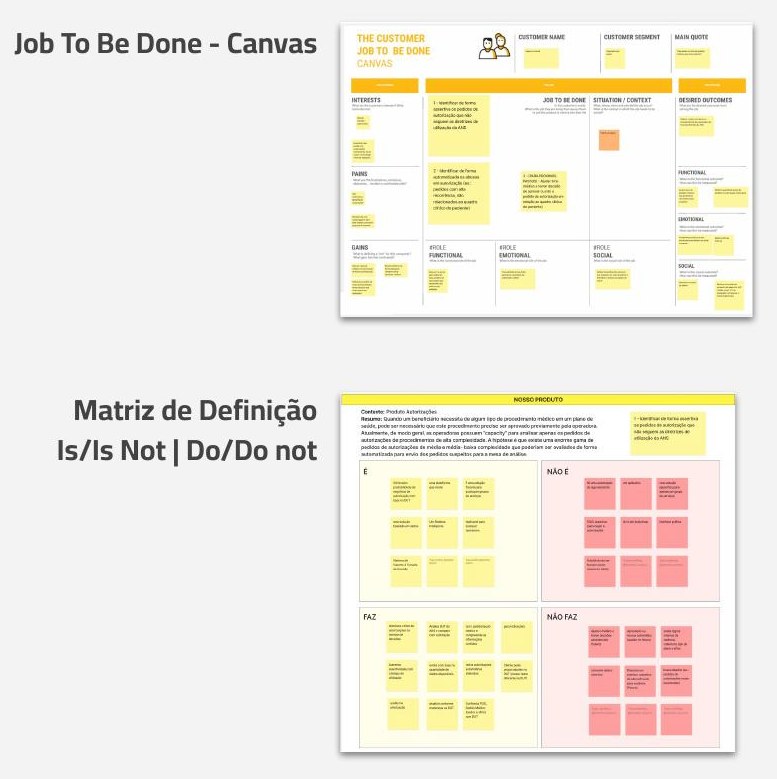
Job To Be Done Canvas and Is/Is Not · Do/Do not matrix - 03
Collaborative ideation and feature mapping
Collaborative sessions with business, engineering and data science produced the platform's feature map, from automatic regulatory list updates to scoring of authorization requests.
- Regulatory procedure list updated to the latest official version
- Scoring of procedure authorization requests
- Continuous evaluation of solution performance
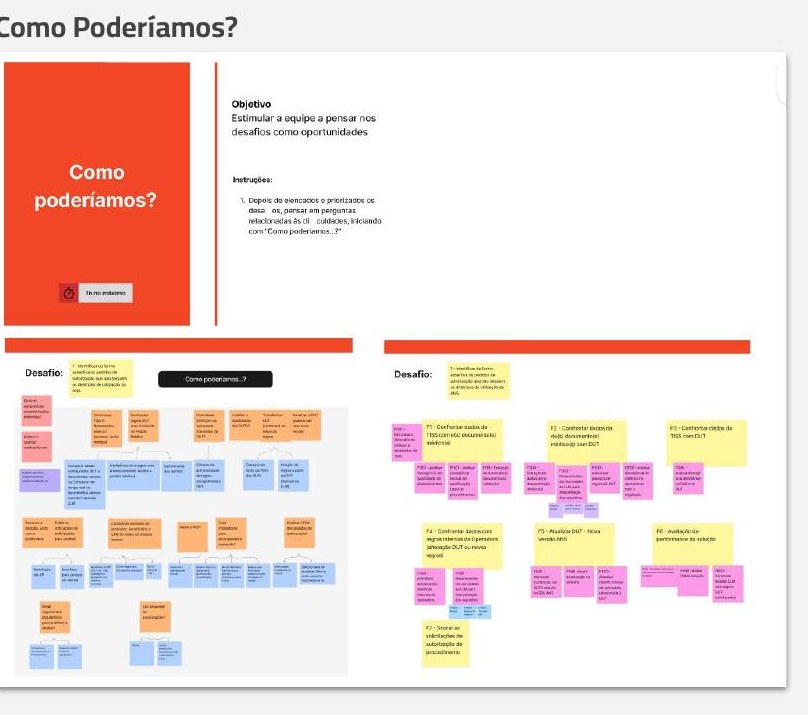
Collaborative ideation — How Might We? - 04
Prioritisation and agile release planning
Each feature was assessed by perceived value and development effort, drawing a clear line between the MVP essentials and planned evolution.
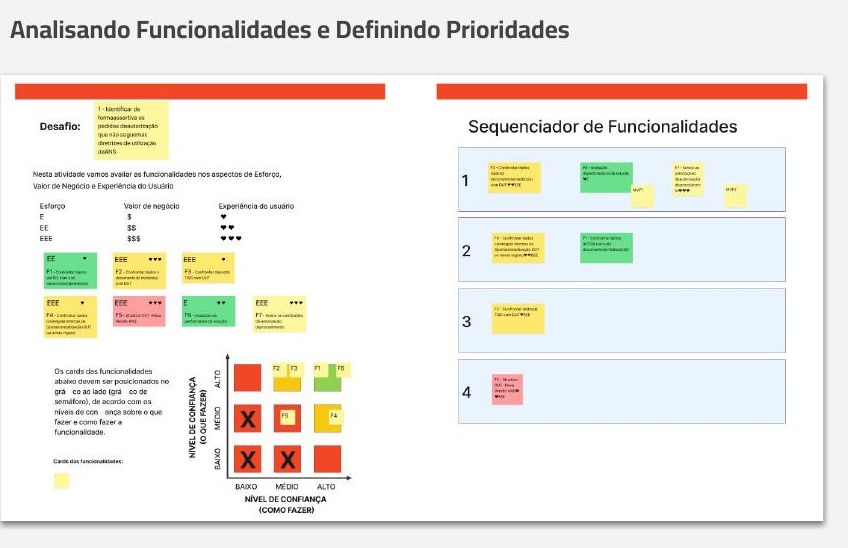
Analysing features and setting priorities 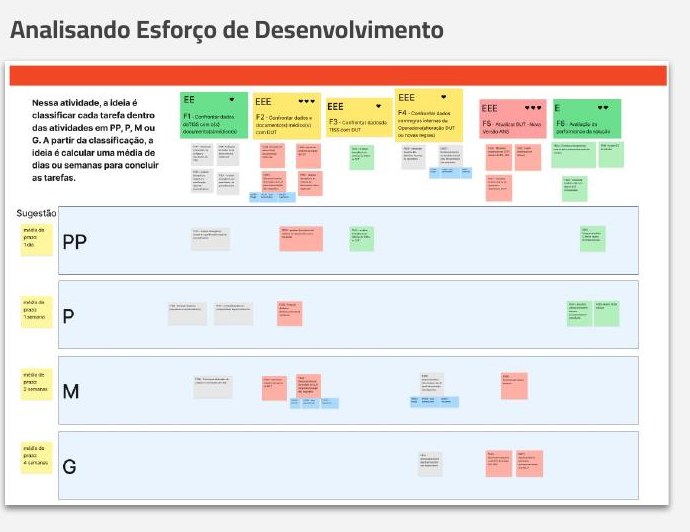
Technical feasibility and effort estimates - 05
Consolidating the MVP — Canvas
The MVP was consolidated into a shared canvas: problem, users, journey, features, success metrics and regulatory risks in a single view for executive decision-making.
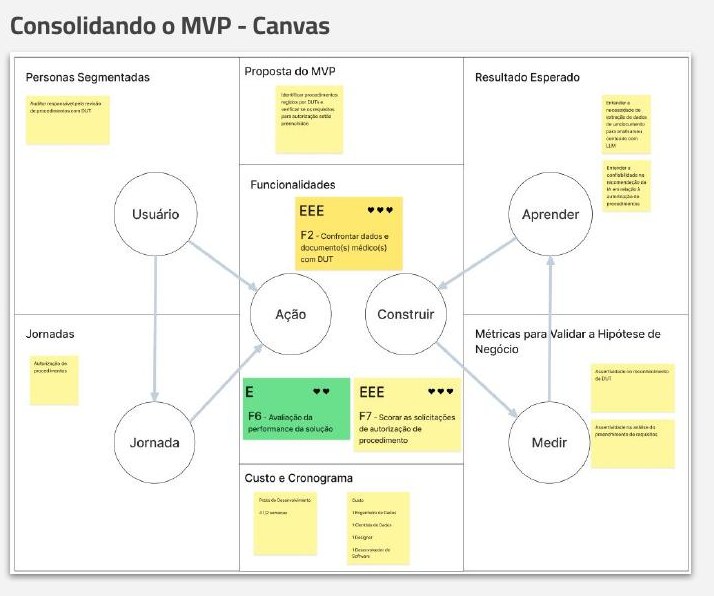
Consolidating the MVP — Canvas - 06
Validation through proofs of concept
The architecture was validated through targeted proofs of concept with Large Language Models, simulating real medical audit scenarios with genuine documents and coverage rules.
Impact
Projected results include a 40% gain in analytical efficiency, a 30% drop in improper automatic approvals and a scalable, frictionless automation model for standardised medical authorizations.
Discuss a similar challenge